

More Than an Afterthought: Meet Onuki, the Barista Making Hotel Coffee Personal
━━━━━━━━━━━━━━━━━━━━━━
BEHIND THE EXPERIENCE #01
Barista Stories: Building Coffee Culture Inside LIVELY HOTELS
━━━━━━━━━━━━━━━━━━━━━━
More Than an Afterthought: Meet Onuki, the Barista Making Hotel Coffee Personal
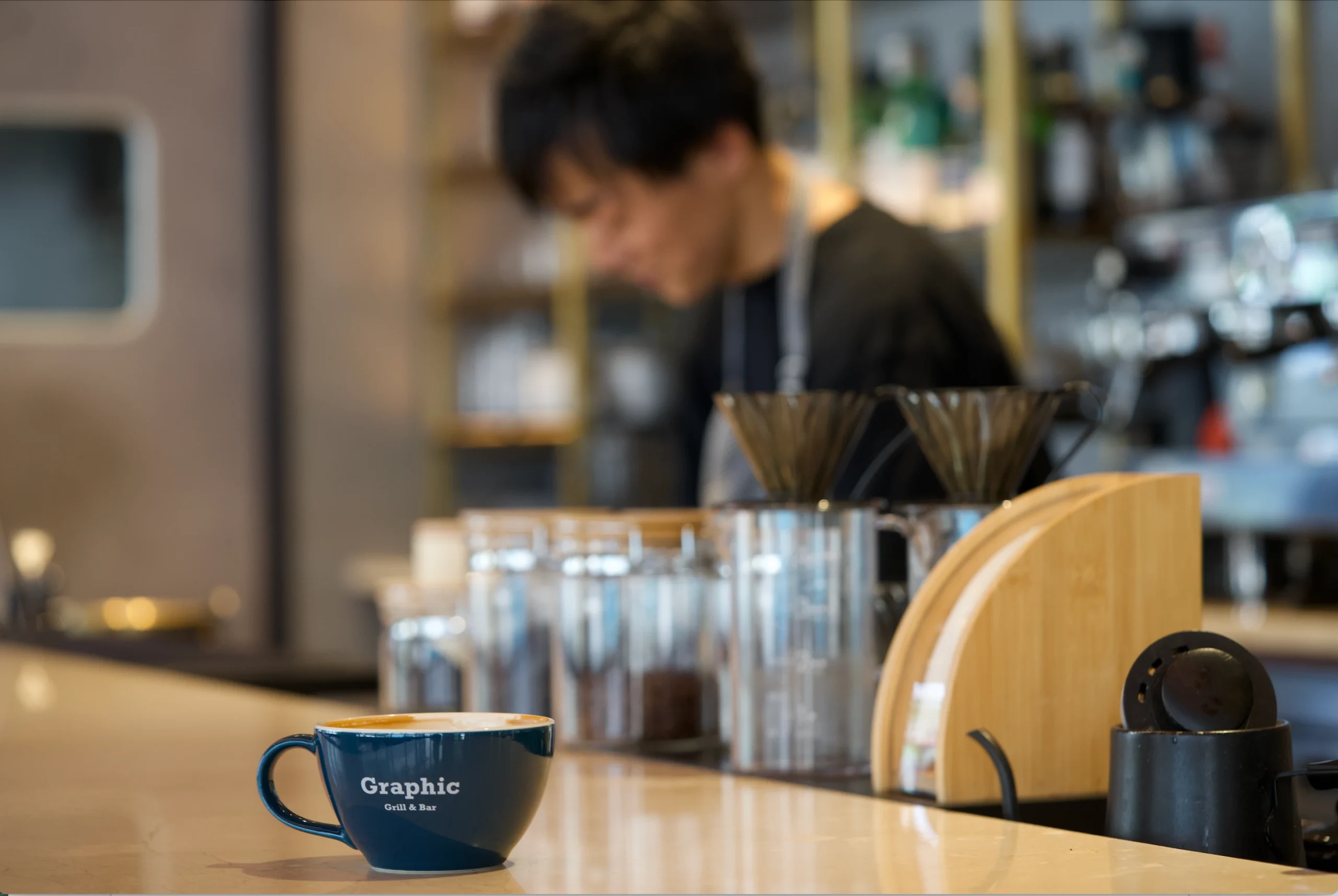
BEHIND THE EXPERIENCE is a new interview series where we meet the people behind the experiences at LIVELY HOTELS and hear about the ideas, details, and stories that guests might not usually get to see.
For our first story, we sat down with Onuki, a barista at Graphic Grill & Bar inside HOTEL GRAPHY SHIBUYA.
When you think of hotel coffee, you might think of something that simply comes with your stay or meal, rather than a cup worth seeking out on its own. To be honest, that was how I saw it before meeting Onuki too.
For Onuki, coffee is not just about making a good cup. It is also about the conversation across the counter and getting to know how each guest likes their coffee.
We asked him where that passion comes from, what goes into each cup, and the kind of coffee culture he hopes to build inside a hotel.
“I used to think hotel coffee was just an add-on too”
Shiosaki Can I ask you something honestly? When I think of hotel café coffee, it always feels like an afterthought. Like they’re charging a lot for coffee that’s just bitter.
Onuki I totally get that. I probably felt the same way.
Shiosaki Wait, you too?
Onuki Honestly, sometimes it’s just expensive without being particularly tasty.
It’s unexpected to hear a hotel barista himself acknowledge this. That immediately makes me want to know what makes his coffee different.
Shiosaki So what’s different about yours?
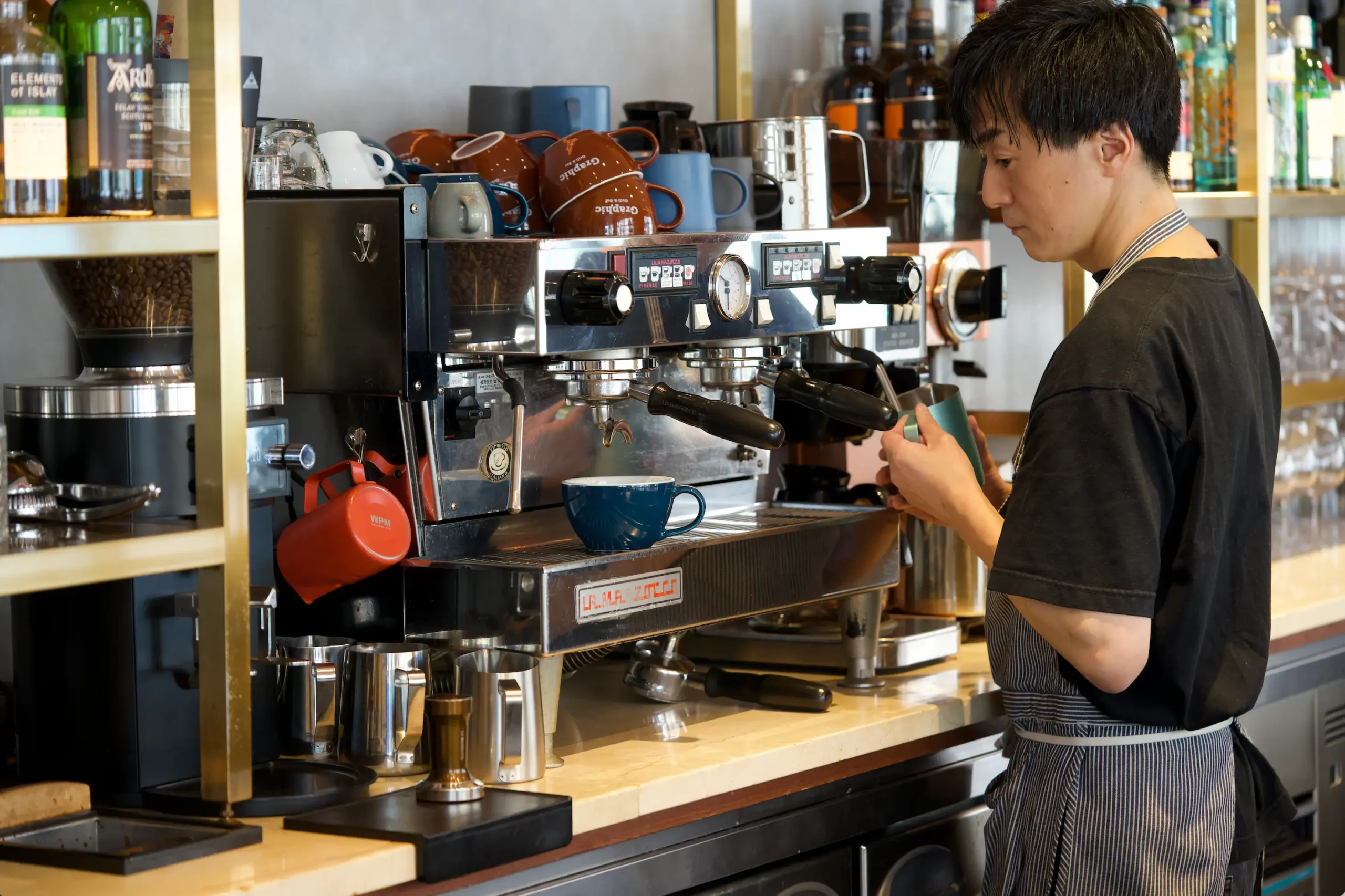
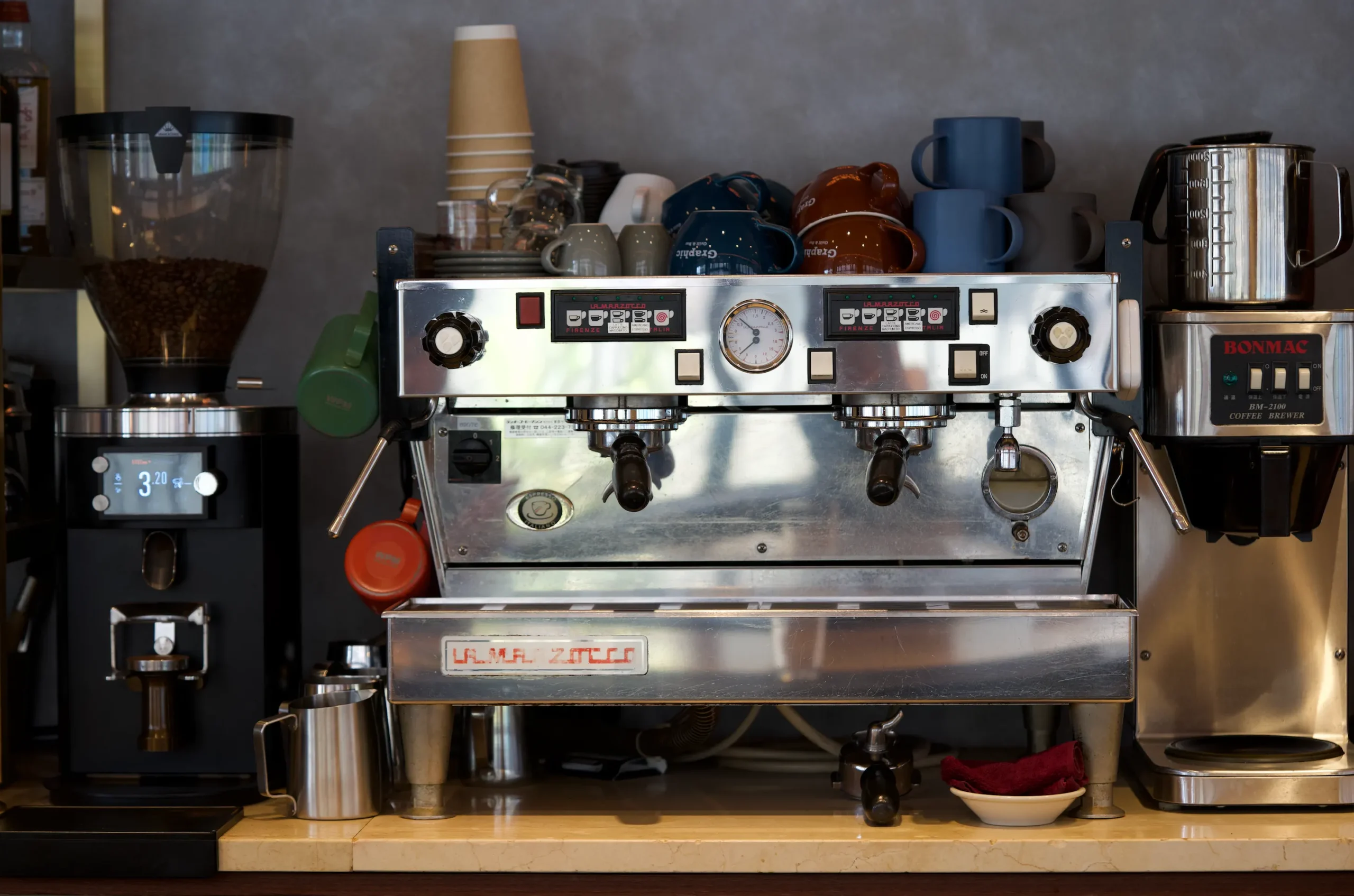
Onuki Most hotel cafes use fully automatic machines—just push a button. But we use semi-automatic.
Every espresso is hand-pulled, and our pour-overs are made by hand too. We source our beans from SOL’S COFFEE, a specialty roaster in Kuramae. That was something we committed to from day one.
Rather than relying on a fully automatic machine that serves coffee at the push of a button, the team uses a semi-automatic espresso machine, with each cup prepared by hand. The beans are also sourced from a specialty coffee roaster.
Coffee here does not feel like just another item that happens to be on the menu. From the way it is made to the conversations that happen across the counter, it is treated as an experience in its own right.
Maybe that is part of what a lifestyle hotel can offer too: small details that make the time you spend there feel a little richer.
Experimenting daily with the same beans
Shiosaki So, just how much of a coffee nerd are you?
Onuki Back then, there was a specialty coffee shop near my place. I happened to buy some beans there and brew them at home, and they were incredibly good. That made me want to learn more, so I started reading everything I could about coffee.
I learned that changing things like the water temperature, brew time, and grind size could completely change the taste, so I started experimenting with a different brewing method every day.
Shiosaki Every day?
Onuki Pretty much every day. I’d use the same beans and tweak one thing at a time. Higher temperature one day, longer extraction the next, just to see what would happen to the flavor.
Shiosaki Just hearing that sounds kind of… intense.
Onuki Is it?
By this point, I was starting to realize just how deep Onuki’s curiosity about coffee goes.
This was way beyond “I just like good coffee.” He had basically turned his kitchen into a little coffee lab, constantly experimenting with how different brewing methods changed the taste.Shiosaki Did you attend barista school?
Shiosaki Did you go to barista school too?
Onuki I did. I studied there for a year and earned a license from the Japan Barista Association. But I didn’t switch careers right after finishing the program. At the time, I still had my regular office job, and after work I’d head to an Italian restaurant for a second job. I was doing that about twice a week, from the evening until late at night.
Shiosaki You were doing double shifts on weekdays until midnight? That’s some serious dedication. Most people couldn’t handle that.
Onuki Looking back, I probably overdid it. (laughs)
Onuki eventually made the leap from office worker to barista and decided to pursue coffee full-time.
Hearing how much time and effort he put into getting there, it started to make sense why his coffee tastes so good. It is not just about technique. You can tell how seriously he has been thinking about coffee, experimenting with it, and trying to make each cup better.
The Italian culture of “Mio Bar”
Shiosaki I’ve noticed there are a lot of international guests here. Is that usually the case?
Onuki Since we’re inside a hotel, about 90% of our guests are from overseas. A lot of them already have their own way of drinking coffee, their own preferences. If someone is staying for two or three weeks, I’ll ask what they like the first time. Then after a few days, it can get to the point where I’m making their usual order before they even ask. By the end of the stay, sometimes we’re even calling each other by name.
Shiosaki At that point, you’re basically like their go-to bartender, but for coffee (laughs)
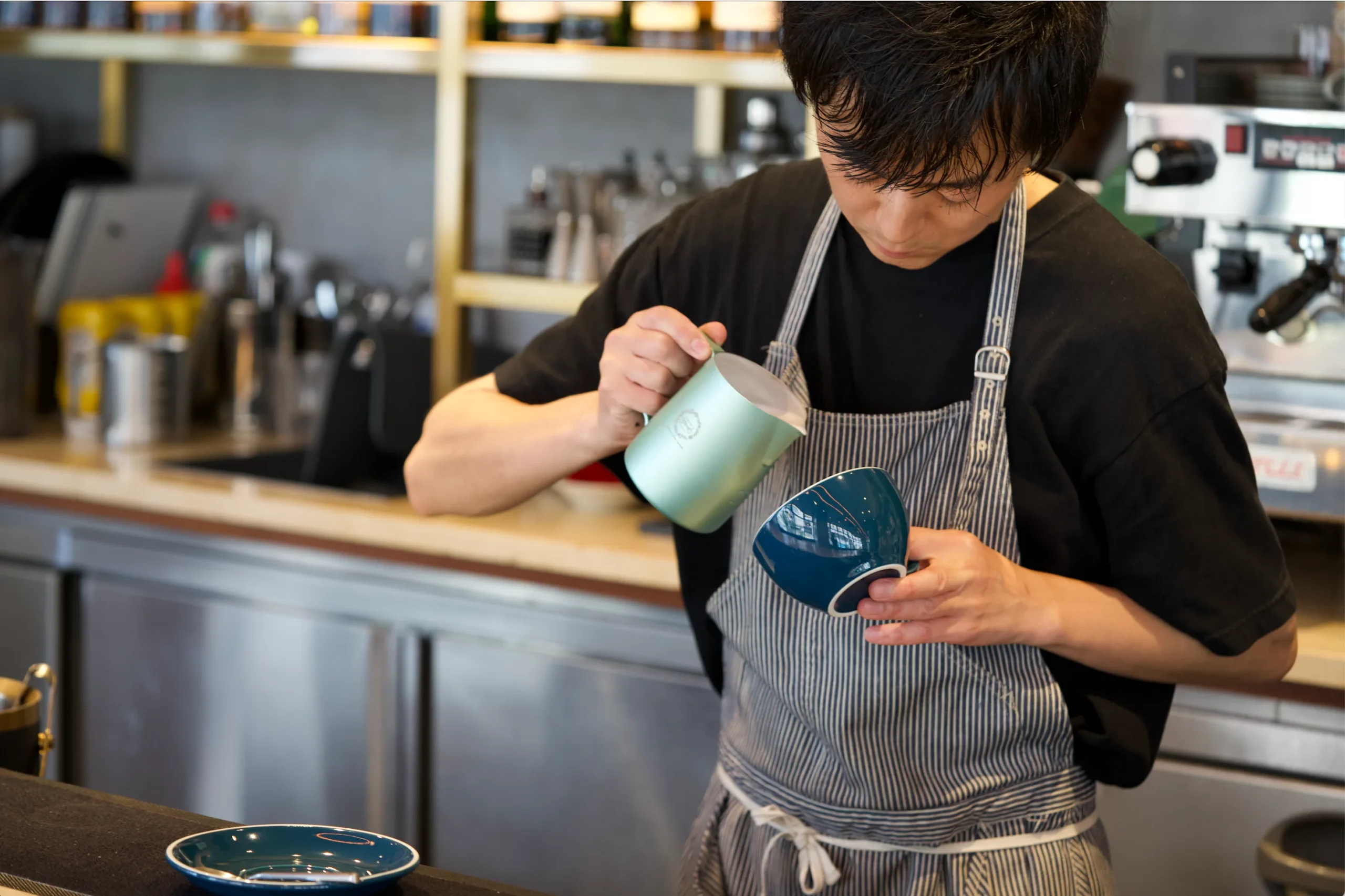
Onuki In Italy, there’s a concept called Mio Bar—”my bar.” It’s where the barista knows you and crafts your drink to your taste. A cappuccino isn’t just a cappuccino—it’s your cappuccino. Different temperature, different foam ratio, different espresso intensity. All customized.
Shiosaki I like that. You actually visited Italy too, right?
Onuki Yeah, about a week during barista school. It was more of a quick trip than a deep dive, but I got to see their café culture.
Shiosaki I’ve heard Italians just grab a quick espresso standing at the counter before work.
Onuki Exactly like that. And apparently, in Italy, cappuccino is really more of a morning drink. People usually have it before noon, and I’ve heard ordering one in the afternoon can be considered a little unusual.
Shiosaki Really?
Onuki I’m not sure why. (laughs) I think it’s more of a cultural etiquette thing. Seeing that made me want to bring a little of that idea back here too, even in a hotel cafe bar in Japan, where we can make a cup that really feels like your coffee.
At a bar, it feels completely normal to say, “Make my highball a little stronger,” or, “Can you make me something on the sweeter side that doesn’t taste too boozy?” We tell bartenders what we like all the time.
But at a cafe? I realized I had never really done the same with coffee.
Even with a skilled barista right in front of me, I had somehow assumed I should just order from the menu and leave it at that. Apparently, Onuki actually loves these kinds of requests.
It felt like I had picked up a simple new way to enjoy coffee: just tell the barista what you like, or even what kind of mood you are in, and see where the conversation takes you.
I Tried Asking for a Latte with a Stronger Coffee Flavor, but Still Mellow
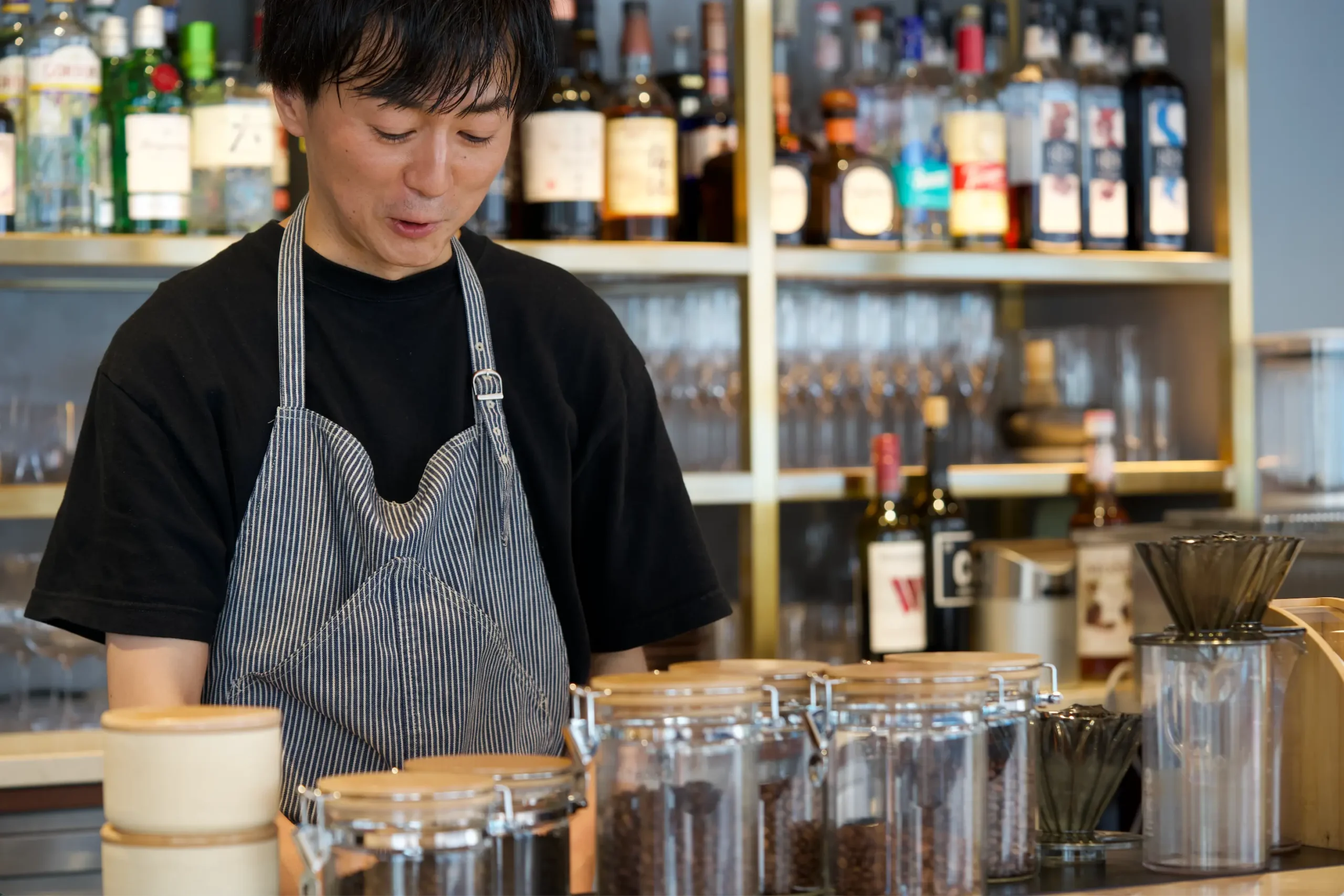
So I decided to give it a try myself and tell Onuki exactly what I like, just like some of the international guests do.
“I like a strong espresso flavor, but I also like plenty of milk.”
It was a pretty vague request, but Onuki smiled and started making my drink.
The bar counter makes it easy to chat while he works, so I found myself asking questions without really thinking about it.
“For what you’re in the mood for, I think a slightly stronger espresso with milk at a lower temperature might work,” he said, moving quickly behind the counter.
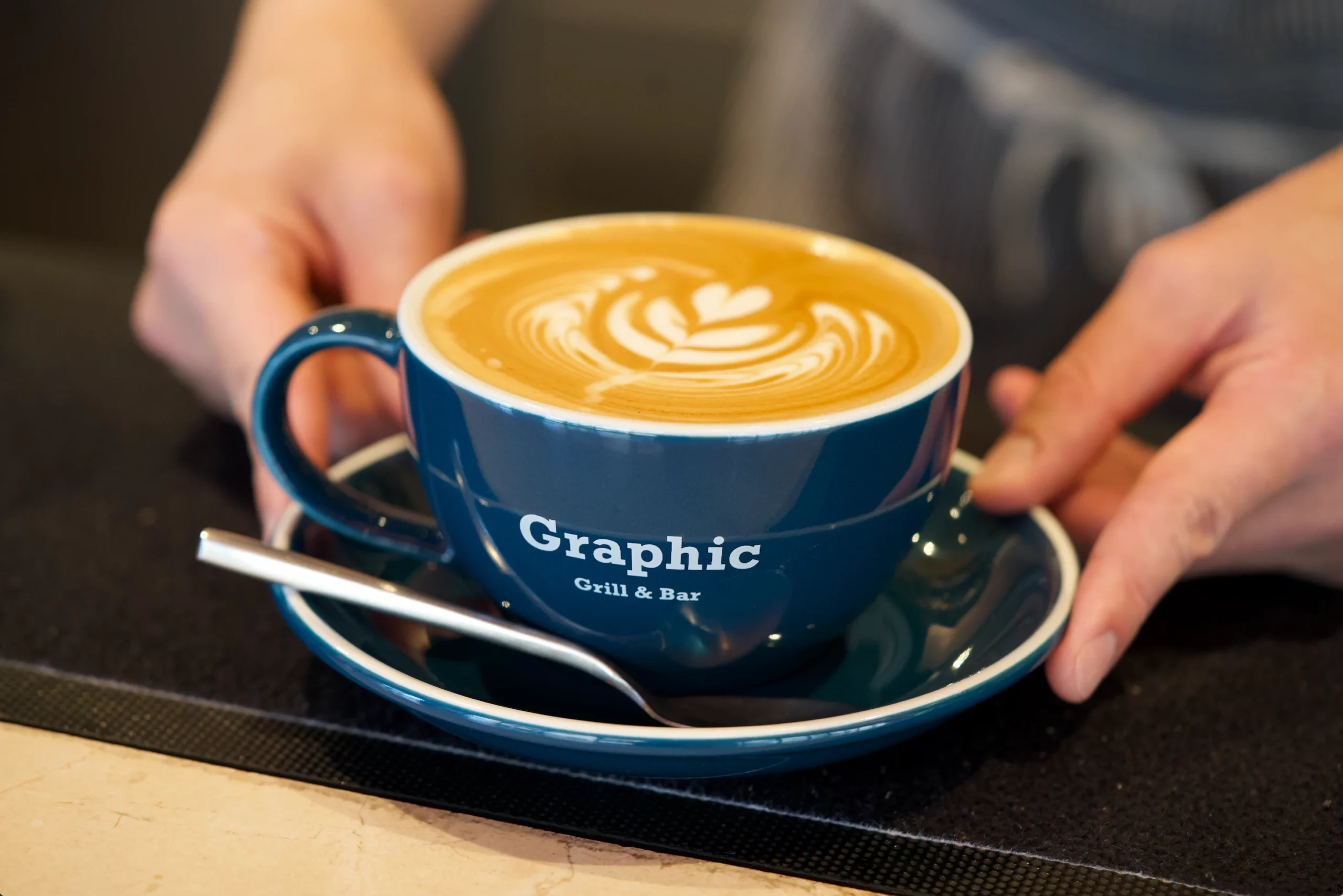
This time, he made my cafe latte with a ristretto, a shorter pull of espresso.
It was fun watching my very vague request turn into an actual drink. And somehow, talking with Onuki made me realize there are still plenty of ways to drink coffee that I have never tried, and probably a few things about my own taste that I have not figured out yet.
The Beans Already Smell Like Peaches
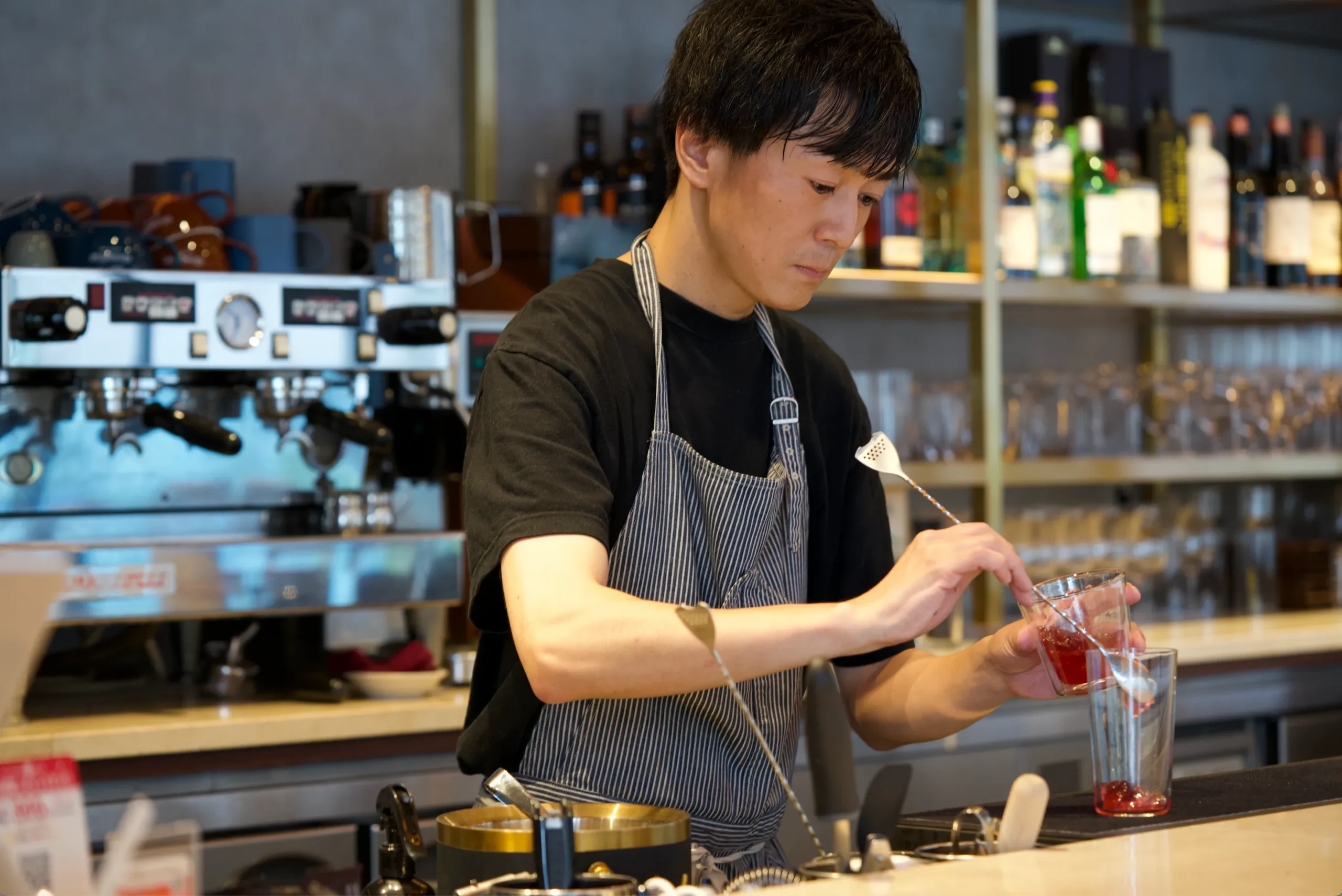
Onuki also creates seasonal non-alcoholic drinks every month or two.
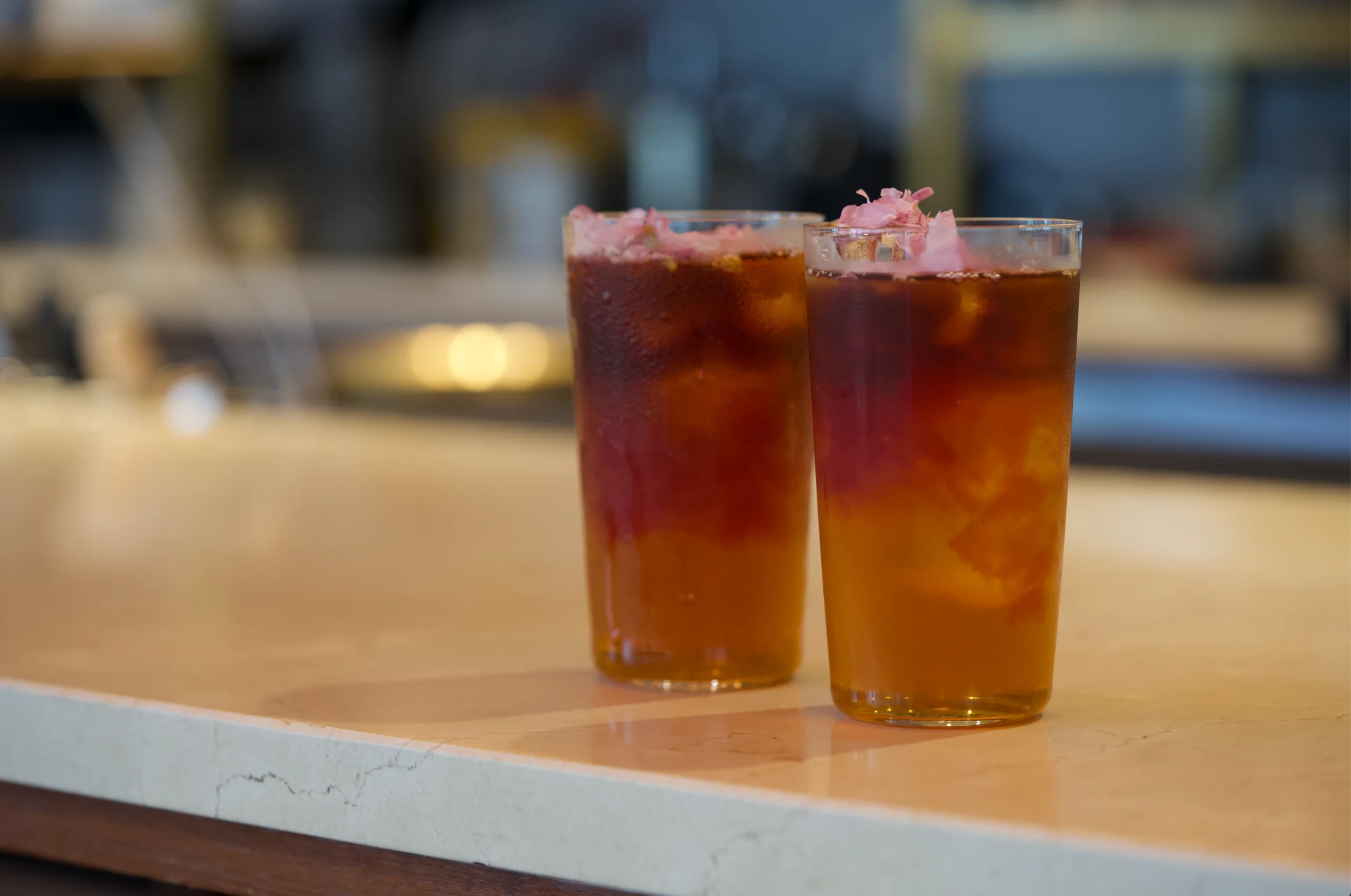
Onuki For July and August, we’re serving a three-layer drink called the Triple-Layer Peach Coffee. At the bottom is a jelly made with white peach oolong tea and hibiscus. The middle layer combines white peach oolong with peach and lychee syrup, and on top is a peach-flavored coffee.
Shiosaki White peach oolong? I’ve never heard of that.
Onuki It’s a Chinese tea. It genuinely smells like peach. I use it in both the jelly and syrup, so the peach flavor carries all the way through as you drink it.
Shiosaki By the way, is the peach flavor in the coffee a syrup?
Onuki No, it’s not. Coffee goes through a processing stage in the country where it’s grown, and if fruit-based yeast is added during fermentation, the beans themselves can take on a peach aroma. So the peach flavor isn’t added afterward. It’s already there in the beans. We use that coffee on top, so all three layers have a different kind of peach character.
Shiosaki How do you come up with these ideas?
Onuki I kind of believe that if you borrow ideas from three different places and combine them, you end up with something original. So I think part of the work is simply exposing yourself to as many ideas as possible and building up that pool of inspiration. Honestly, coming up with new drinks might be the part I enjoy most.
I tried the Triple-Layer Peach Coffee myself, and it was even better than I expected.
The first surprise was how well peach and coffee actually work together. It was bright and refreshing, with just enough sweetness, and the jelly at the bottom added a nice change in texture as I drank.
It never felt too heavy or too sweet, and by the end, I had finished the whole thing without even realizing it. It really did feel like the perfect summer drink.
“Okay, This Might Be a Bit Much.” — A ¥10,000 Metal Ball”
Mid-conversation, Onuki suddenly grins and says something.
Onuki There’s this piece of coffee gear that makes me think, “Okay, maybe this is going a little too far.”
Shiosaki What is it?
Onuki There’s this metal ball, literally a sphere. You keep it in the freezer until it’s completely chilled. Then you place it on a stand over the server and brew the coffee so it runs over the ball before dripping into the server below.
Shiosaki: What’s the idea behind that?
Onuki Coffee aroma is really volatile, so the idea is to cool it down quickly and keep as much of that aroma from escaping as possible. And because you’re not using ice, the coffee doesn’t get diluted. The ball costs around ¥10,000.
Shiosaki Wait, they actually make equipment this specialized?
Onuki It really feels like coffee gear has gone about as far as it possibly can.
At this point, the level of detail he pays attention to is on another level. And honestly, having someone this deep into coffee making a cup right in front of you feels like a bit of a luxury.
Onuki We actually use the same idea for our Triple-Layer Peach Coffee. We chill the coffee quickly as we brew it so the peach aroma does not escape too much.
Shiosaki So all that coffee geekiness actually makes its way into the drink!
“Your home iced coffee can beat the coffee shop”
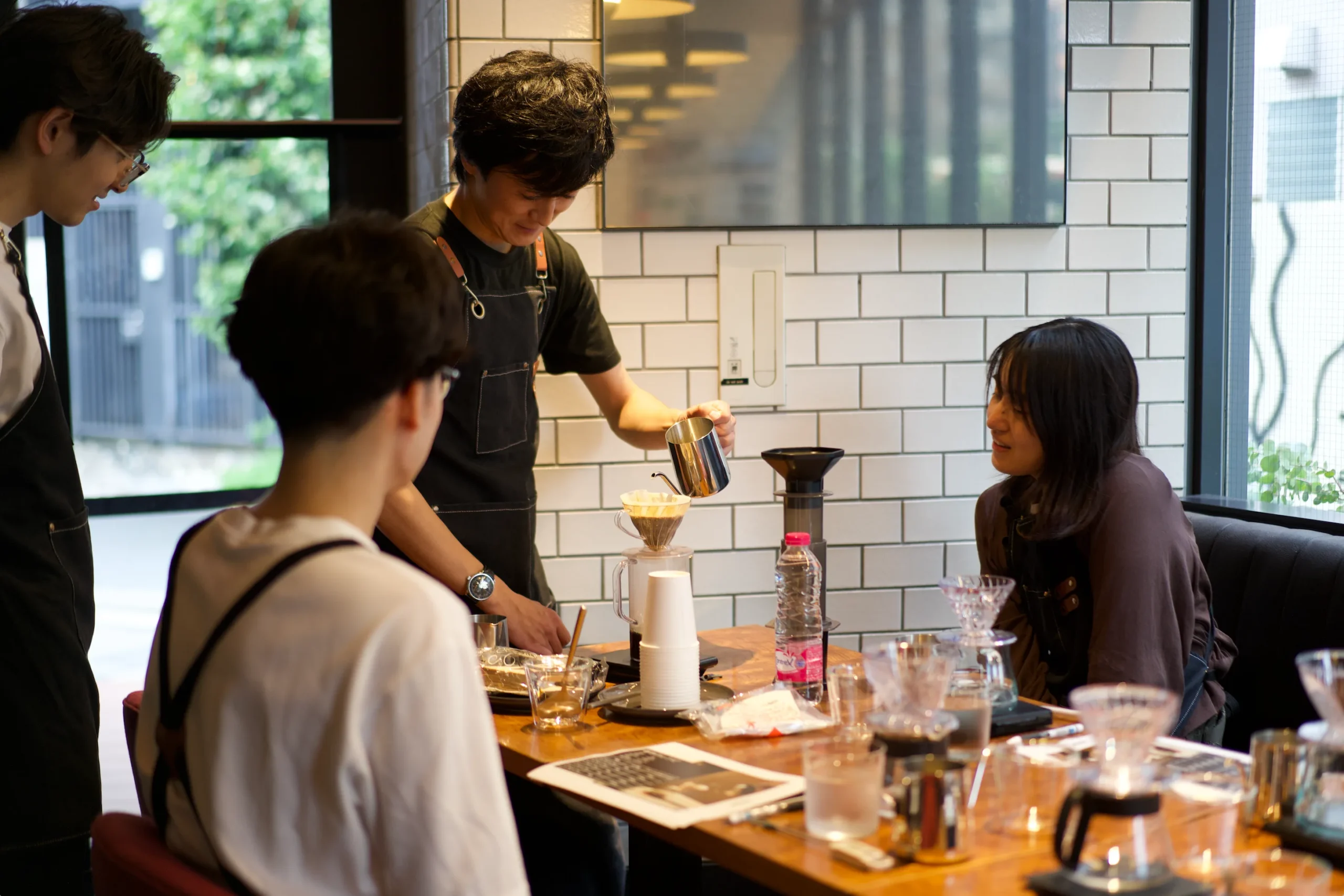
Onuki also hosts a coffee workshop once a month. He started the series last May, and after about a year, nearly 100 people have taken part.
Onuki At the time, HOTEL GRAPHY SHIBUYA still wasn’t very well known. I wanted to give people more reasons to discover the hotel and let them know, “Hey, we serve coffee here too. You can come in and use this place just as a cafe.” That’s really why I started the workshops.
he workshops attract all kinds of people, from complete beginners to serious coffee enthusiasts who come ready with some pretty sharp questions.
This January, Onuki also teamed up with Kantan na Yume, a popular traditional Japanese sweets shop in Shibuya’s Oku-Shibu area, for a special workshop exploring pairings between coffee and Japanese sweets.
Shiosaki So in August and September you’re doing the iced coffee workshop?
Onuki Yes. This is just my personal take, but I honestly think iced coffee made at home can be better than what you get at a cafe.
Shiosaki: Wait, you’re a barista and you’re saying that?
Onuki: A lot of cafes make iced coffee in larger batches and keep it chilled in the fridge. It’s actually pretty rare to get iced coffee that’s been brewed fresh to order. At home, though, you can brew it and chill it right away, so you can get much more of that fresh aroma and brightness.
He works as a barista, yet he has no hesitation saying that homemade iced coffee can win.
That feels very Onuki. More than promoting his own coffee, he genuinely wants people to discover how much fun coffee can be.
And maybe that is why his workshops always feel so lively.
A note from Onuki
At the end of our conversation, I asked what he hopes people will do after reading this.
Onuki Of course, I’d love coffee lovers to come by, but I also want people to enjoy the little sense of escape that comes with being in a hotel. It feels different from your everyday cafe, but it’s not formal or intimidating at all. You can just drop in, relax, and enjoy the space however you like. That balance is something I really want people to experience.
Shiosaki And is it okay to customize your order too? Like asking for something sweeter or a little stronger?
Onuki Absolutely. If you tell me what kind of thing you’re in the mood for, I’ll do my best to make it. And if you start talking to me about coffee across the counter, I’ll probably just keep talking forever. So please, come say hi.
So, if you find yourself with a little time to spare in Shibuya, stop by the cafe bar at HOTEL GRAPHY SHIBUYA.
“Something a little sweeter,” or even, “This is the kind of mood I’m in today.” That’s more than enough.
Tell Onuki what you’re in the mood for, and enjoy the conversation just as much as the coffee. You might end up discovering a cup that feels just right for you.
And maybe, little by little, this could become your own Mio Bar in Tokyo: a place you can drop into casually and come back to whenever you feel like it.
The Hotel Featured in This Story
HOTEL GRAPHY SHIBUYA
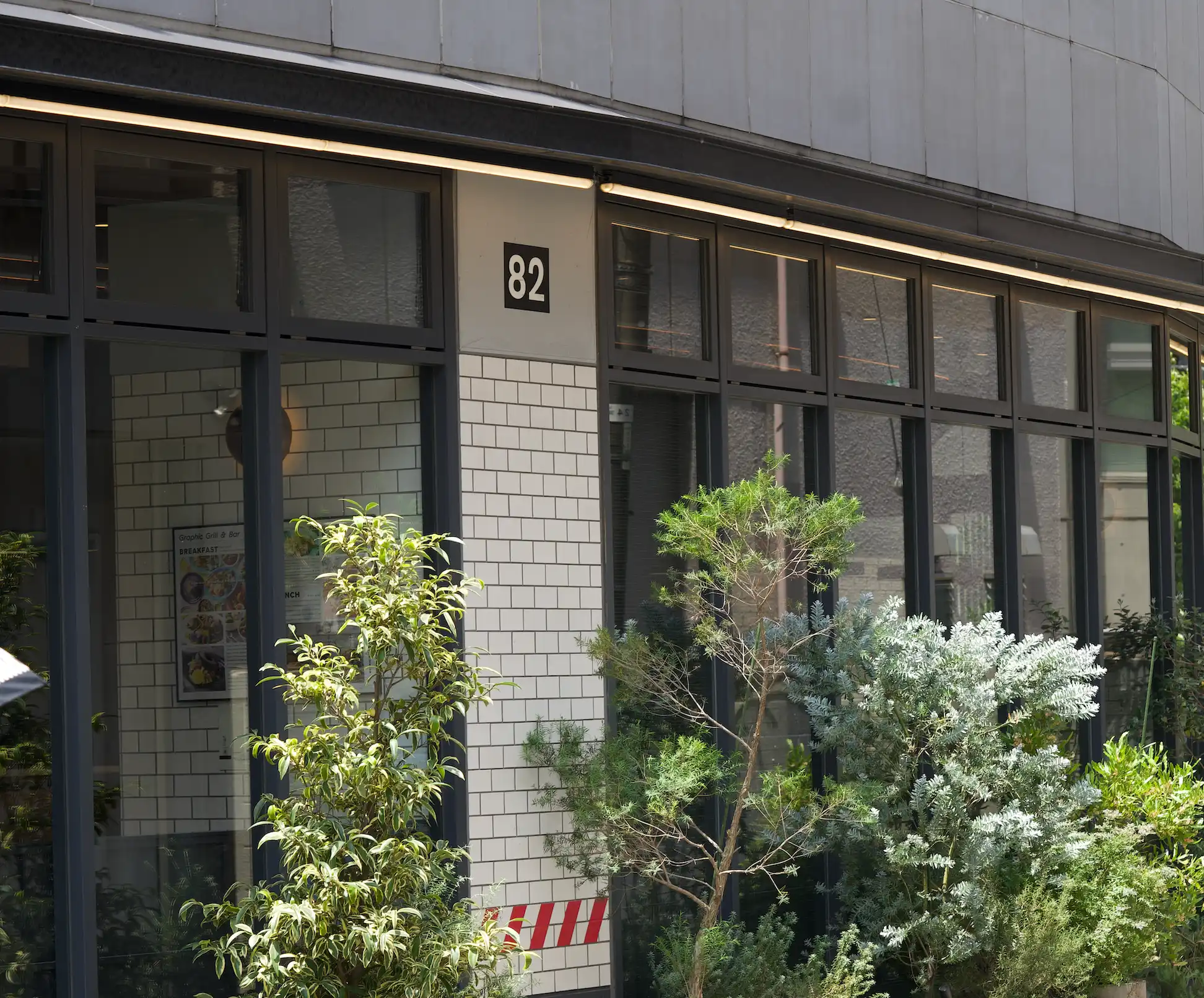
Located between Shibuya, Ebisu, and Daikanyama, HOTEL GRAPHY SHIBUYA combines the comfort and design of a full-service hotel with an integrated hostel. It draws a diverse mix of guests—from international backpackers to design-conscious travelers—creating a relaxed, international atmosphere that feels like stepping into an overseas hostel.
Where to Find Onuki
Graphic Grill & Bar
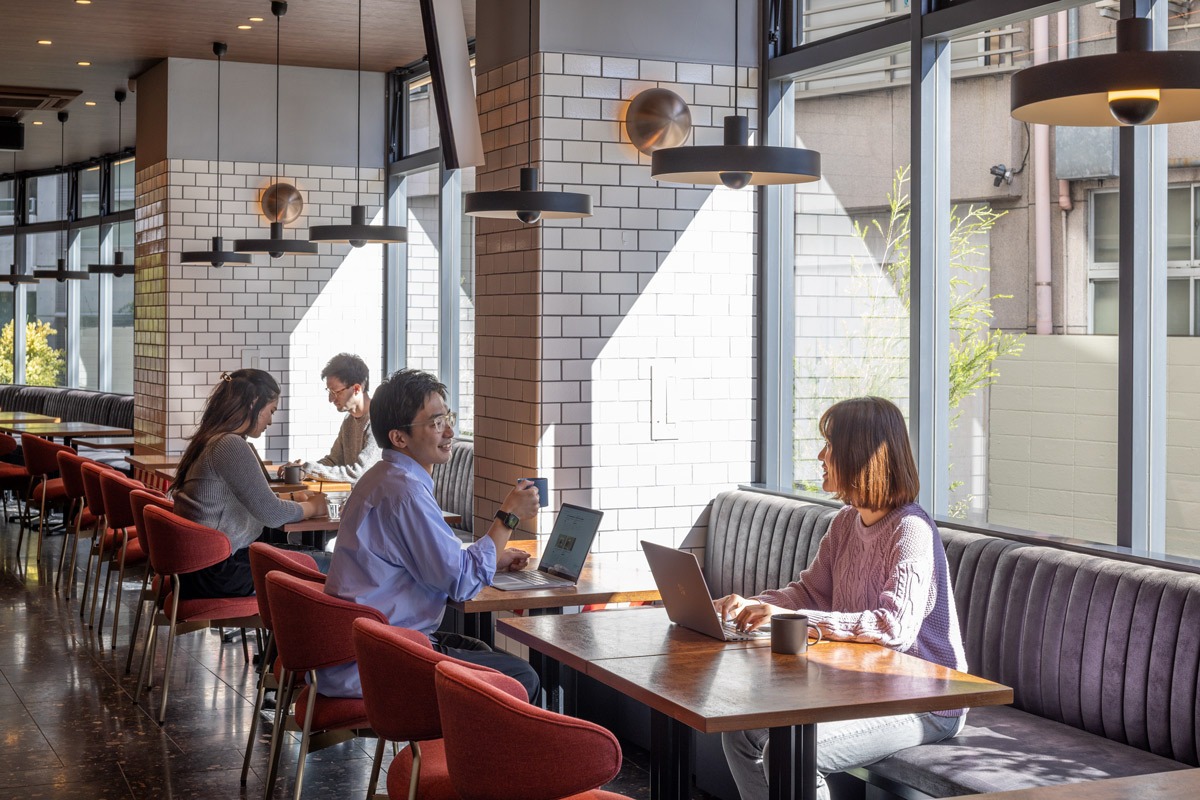
Located on the 1st floor of HOTEL GRAPHY SHIBUYA, this café and dining space runs from morning through late-night bar service. Beyond Onuki’s hand-pulled espresso and pour-overs, you’ll find carefully crafted grilled dishes and cocktails. The space welcomes both hotel guests and walk-ins.
◾️Location
1-29-3 Higashi, Shibuya Ward, Tokyo
HOTEL GRAPHY SHIBUYA, 1F
◾️Access
7 minutes on foot from JR Shibuya Station, Shinsouth Exit
9 minutes on foot from Shibuya Station, C2 Exit (all lines)
10 minutes on foot from Ebisu Station (all lines)
11 minutes on foot from Daikanyama Station, Tokyu Toyoko Line
◾️Hours
Morning: 7:00 AM – 10:00 AM
Lunch: 11:00 AM – 3:00 PM
Café: 3:00 PM – 5:00 PM
Dinner & Bar: 5:00 PM – 11:00 PM (L.O. 10:00 PM)
◾️Closed
Wednesdays (lunch and dinner only)
→Make a Reservation →Official Website (Restaurant & Bar)
Bring Nothing, Learn Everything: An Intimate Coffee Workshop Series
Learn to Brew: Monthly Coffee Workshop with Onuki
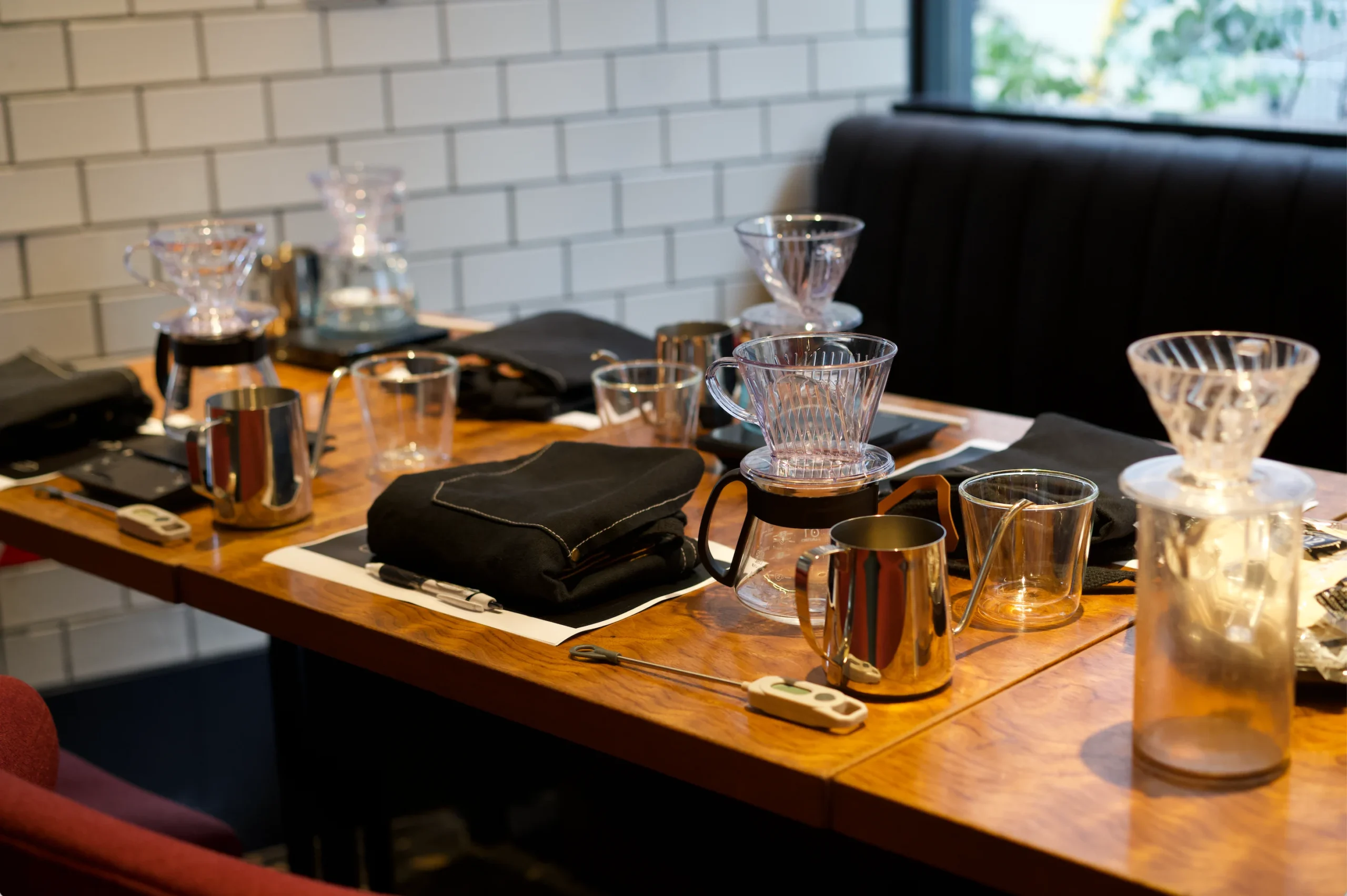
No experience necessary. Join Onuki to explore how beans and brewing methods create different flavors. All skill levels welcome.
For the latest coffee workshop schedule, please check our official Instagram or Peatix event page.
[ Check Instagram ] [ View Events on Peatix ]